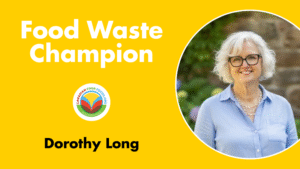
Food Waste Champion: Dorothy Long
Meet Dorothy Long of Canadian Food Focus, and our Food Waste Champion for the month of July.
1. Can you tell us a bit about yourself, your background and what led you to your role with Canadian Food Focus?
I grew up on a Saskatchewan farm and went on to study home economics and education at the University of Saskatchewan, which gave me both a practical and academic grounding in food, nutrition and teaching. Over the past 25+ years I have worked in food and agriculture communications, organizing farm tours for dietitians, chefs, journalists and other food influencers, and developing agrifood marketing initiatives that connect Canadians with the crops and livestock grown here.
This led to helping develop Canadian Food Focus as a national initiative to improve food literacy from farm‑gate to plate. Today, I serve as Managing Director of Canadian Food Focus, where I bring together my background in home economics, education and agricultural marketing to lead a team focused on answering Canadians’ questions about food and farming.
2. What personal experiences shaped your passion for improving Canadians’ understanding of food and farming?
Growing up on a Saskatchewan farm, I saw first‑hand the care, risk and long hours that go into producing food, from seed and animal care decisions to harvest. Later, as I began working in communications and marketing for Canadian commodities like canola, flax, pulses, mustard and pork, I realized there was a significant gap between the realities on farms and what many Canadians understood about how food is produced. Not everyone has the opportunity to visit a farm or talk with farmers.
Organizing farm tours for dietitians, chefs, journalists and food writers underscored how powerful it is when people can meet farmers, ask questions directly and see farming practices and the decisions farmers make everyday about soil health, animal care and technology. Those experiences convinced me that clear, practical, evidence‑based information about food and farming could help Canadians feel more confident in their food choices and more connected to the people who grow their food.
3. Tell us about Canadian Food Focus. How does it support food literacy, food waste prevention, and what makes it so special?
Canadian Food Focus is a national initiative founded in 2019 to improve the food literacy of Canadian consumers from farm‑gate to plate. Through our website and social channels, we share Canadian food and farming stories, explain how food is grown and raised, and provide recipes, cooking tips and expert advice to help people make confident food choices.
Food waste prevention is woven into our food literacy work: when people understand where food comes from, how to store it, use leftovers, and interpret date labels, they are better equipped to use what they buy rather than throwing it away. What makes Canadian Food Focus special is that our content is created by a network of Canadian experts including farmers, ranchers, dietitians, home economists and chefs, and that we deliberately connect farm practices, like innovation to protect soil and animals, to everyday decisions at the grocery store and in the kitchen.
4. What role do you think consumer‑facing education plays in reducing food waste nationally?
Consumer‑facing education is critical because most food waste in Canada happens at the household level, where everyday decisions about shopping, storage and cooking determine what gets used and what ends up in the bin. When we provide clear explanations about topics like best before dates, safe food handling, planning meals, freezing portions and using “imperfect” produce, we give people practical tools to reduce waste without compromising food safety.
Education also helps build trust so Canadians feel comfortable relying on factual guidance rather than misinformation or myths about food safety and quality. I believe, pairing food skills content (recipes, storage tips, leftovers ideas) with farm‑to‑plate stories is especially powerful, because it reminds people of the effort behind every product and reinforces the value of not wasting it. I remember learning it takes more than a year to grow a pineapple. I have never wasted one bite of pineapple since that day!!
5. How can consumers better appreciate the effort farmers make to ensure food reaches their plates?
One of the most effective ways to help consumers appreciate farmers is to open a window onto real farms through stories, videos and farm tours. At Canadian Food Focus we share virtual farm tours, Ask a Farmer videos and Canadian food stories that show how farmers care for their land and animals, invest in technology and manage weather and market risks to bring food to market.
Connecting specific foods to specific Canadian farms and regions, and highlighting the innovation behind them, helps people see that food is not anonymous; it reflects many complex decisions and a lot of hard work. When Canadians understand that, they are more likely to value food appropriately, use it thoughtfully and see reducing waste as a way to honour the work that went into producing it.
6. What impact has Canadian Food Focus made in terms of food waste reduction?
Canadian Food Focus focuses primarily on improving food literacy around how food is grown, how to cook it and how to make informed choices, and food waste reduction is an important outcome of that work. Our content includes resources on topics such as food date labeling, safe storage, and making full use of ingredients, which can help households waste less.
In terms of reach, the Canadian Food Focus website and social channels now generate millions of impressions and engagements each year, largely among urban Canadians, and our newsletters reach tens of thousands of subscribers. While it is difficult to directly measure behaviour change for food waste at the national level, this scale of engagement suggests that our messages about valuing food, understanding date labels and using ingredients efficiently are reaching a wide audience and supporting other national efforts on food waste reduction.
7. What is your vision for CFF’s role in shaping Canada’s food future?
Our vision is for Canadian Food Focus to continue to grow as a trusted, science‑based hub where Canadians can find clear, practical answers about their food, from production practices to nutrition, cooking and food safety. I see our role as helping bridge the gap between consumers and the agriculture and food sectors, so that questions and concerns can be addressed transparently and respectfully.
Looking ahead, that means expanding our digital reach, collaborating with more partners – like Love Food Hate Waste – in health, education and food service, and continuing to innovate in how we tell stories so Canadians feel confident navigating issues like sustainability, food waste, and evolving technologies in food and farming. Ultimately, we want Canadians to feel both informed and empowered in their food choices, and for farmers to feel that their work is understood and valued.
8. What’s one lesson you’ve learned as a leader in the food sustainability space?
One key lesson I have learned is that listening is as important as explaining. When we take time to understand what Canadians are genuinely curious or concerned about, we can tailor information that meets them where they are, rather than simply broadcasting what we think they should know.
Another lesson is that collaboration across the value chain is essential; meaningful progress on food literacy and food sustainability requires farmers, processors, retailers, health professionals, educators and communicators to align around shared, evidence‑based messages. Canadian Food Focus has been successful because it brings together diverse experts and perspectives, all focused on helping Canadians feel more confident about food and farming.
9. Anything else you would like to share with our audience?
I would encourage Canadians to stay curious about their food: ask questions, look for credible sources, and, when possible, connect directly with farmers and experts. Canadian Food Focus is here as a resource to help with that journey, offering articles, recipes, farm stories, courses and videos that explore Canadian food from many angles.
I am honoured by this work and I am optimistic about the role informed, food‑literate Canadians can play in reducing food waste, supporting sustainable farming and shaping a resilient food system for the future.